Staying in a traditional felt yurt in the Tien-Shan mountains during winter is one of the most rewarding ski touring experiences in Central Asia. However, first-time visitors naturally have questions about heating, hygiene, power, and day-to-day camp life.
Here are the direct answers to the most frequently asked questions from over a decade of operating yurt lodges in Kyrgyzstan.
1. Yurt Heating & Nighttime Temperatures
How warm is it inside the yurts?
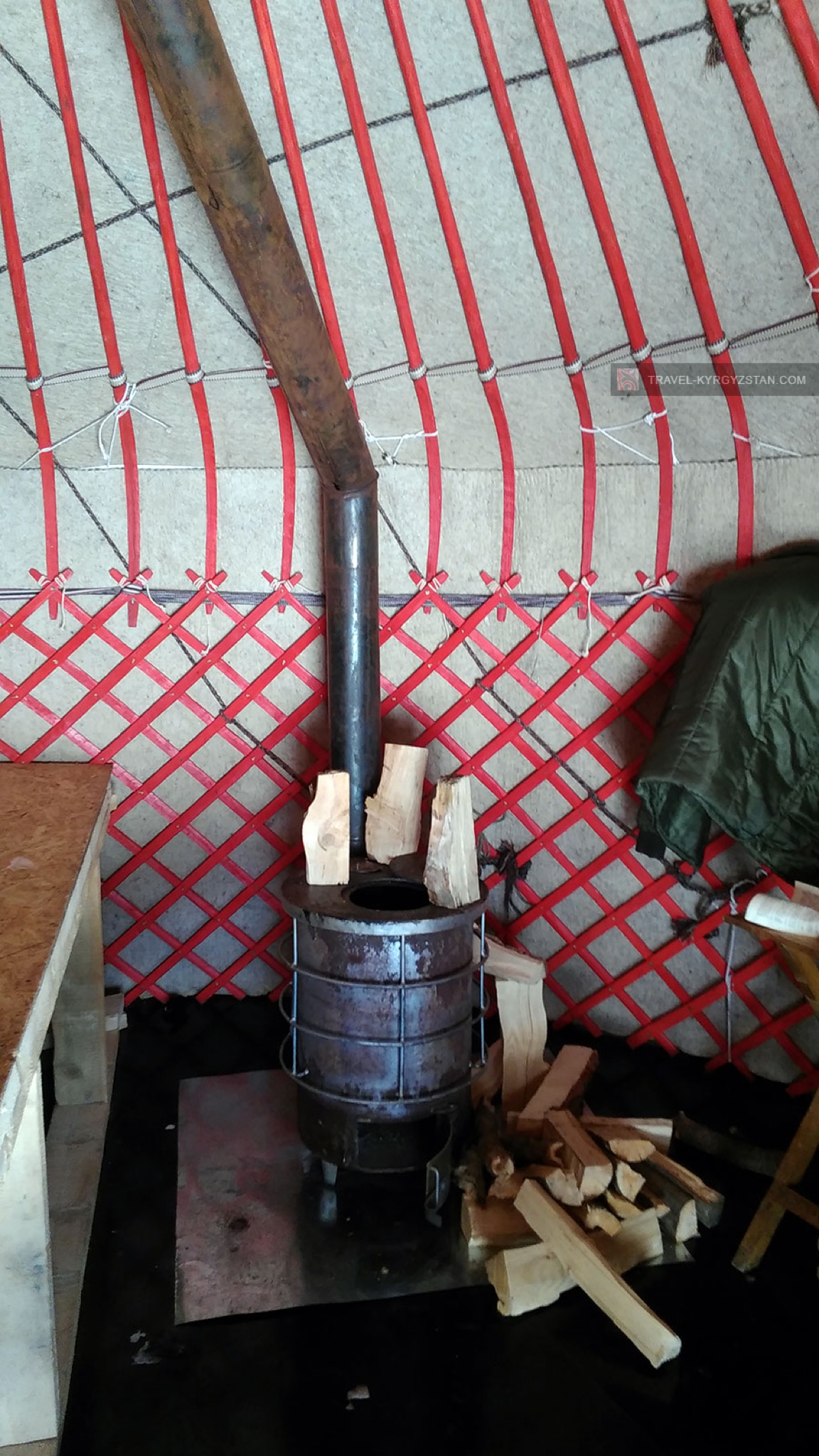
Our winter yurts are constructed with heavy double-layer wool felt insulation and equipped with cast-iron wood and coal-burning stoves. When the stove is running in the evening, the yurt gets warm and cozy (+18°C to +22°C / 65°F to 72°F).
Does the stove burn all night?
The fire naturally settles into hot embers overnight. By early morning before dawn, indoor temperatures drop, which is why we provide thick duvets and insulated bedding. Our camp stoker lights the stoves early each morning so the yurt is warm by the time you wake up.
What sleeping bag should I bring?
We provide fresh mattresses, pillows, and thick duvets. We recommend bringing a lightweight sleeping bag liner (silk or merino) or a compact light +5°C to 0°C (40°F to 32°F) travel bag for personal comfort.
2. Hygiene, Showers & The Daily Banya (Sauna)
How do we shower after a long day of touring?
Every evening, we fire up our mountain banya (wood-fired sauna). The banya features a heated hot-water tank, ladles, and basins for washing. Rolling in fresh powder outside the banya between steam sessions is an essential part of the ritual!
What are the toilet facilities?
Toilets are traditional mountain outhouses located a short walk across the snow from the sleeping yurts. Keep your headlamp and insulated slip-on booties near your bed for nighttime visits.
Where does drinking water come from?
Camp water is sourced directly from clean alpine mountain springs and glacial melt streams. All drinking water and tea provided in the dining yurt is thoroughly boiled and stored in thermoses.
3. Luggage, Gear Hauling & Daily Logistics
Do I have to carry my heavy ski bag and luggage on skins?
No. We transport all your heavy luggage, extra clothes, and food supplies from the road snowline directly to the yurt camp using snowmobiles and utility cargo sleds (up to 25–30 kg per guest). You skin into camp carrying only your light day touring pack.
How do we dry our ski boots, liners, and climbing skins?
The main dining and social yurt is kept continuously heated and features dedicated overhead drying lines and boot racks. Your boot liners, socks, and skins will be bone-dry every morning before breakfast.
4. Electricity, Connectivity & Radios
Can I charge my camera, phone, and avalanche transceiver?
Yes. Our camps utilize solar battery banks and scheduled evening generator runs to provide 220V charging power (standard European 2-pin sockets). We recommend bringing personal power banks (10,000–20,000 mAh) to keep spare batteries warm inside your sleeping bag.
Is there mobile cellular service or satellite communication?
- Jyrgalan Yurt Lodge Basecamp: 4G LTE cellular coverage (MegaCom/Beeline) and basecamp Wi-Fi are available.
- Jyrgalan Heights & Jyrgalan Tyup: No cellular service. Most of our remote yurt camps have a satellite phone on site for emergencies, and some ski guides carry personal satellite phones.
- InReach Sharing: We strongly recommend that every group carries at least one Garmin inReach (or similar two-way satellite tracker) and shares their tracking URL / data source with SkiYurt.kg prior to check-in.
Should our group bring two-way radios?
Yes. We strongly encourage touring groups to carry FRS/GMRS or UHF/VHF compatible two-way radios with spare batteries for team communication while descending separate pitches.
5. Food & Dietary Accommodations
What kind of food is served?
Our camp cooks prepare hearty, nutrient-dense hot meals tailored for mountain athletes:
- Breakfasts: Hot oatmeal porridge, fried/boiled eggs, sausages, fresh bread, butter, local honey, jams, and hot coffee/tea.
- Summit Lunches: Packed sandwiches, dried fruits, nuts, Kyrgyz mountain sweets, cheeses, and hot thermos tea.
- Dinners: 3-course dinners including traditional Central Asian dishes (Beshbarmak, Lagman, Plov, Shorpo soup) and fresh salads.
Vegetarian, vegan, and food allergy diets are easily accommodated with advance notice.
6. Avalanche Safety & Group Requirements
What safety gear is mandatory?
Every participant must carry:
- 3-Antenna Digital Avalanche Transceiver (with fresh batteries).
- Metal Shovel (plastic shovels are strictly prohibited).
- Avalanche Probe (240 cm or longer).
Certified rental sets (€15 – €20 / day) are available with advance reservation. Equipment pickup and returns are available at Extreme Shop in Karakol and Ala-Kol Guesthouse in Jyrgalan.
Can I join a guided ski touring package as a solo skier?
No. All guided backcountry ski touring packages and guided expeditions are operated exclusively for private group bookings (minimum 4 participants, maximum 8 skiers).
Because of fitness pacing, avalanche rescue protocol coherence, and group dynamics in remote terrain, we do not combine solo skiers into existing groups.
If you are traveling solo, you are welcome to book individual yurt accommodation at Jyrgalan Yurt Lodge Basecamp (€80/night including full board) and organize independent touring or connect with other self-guided skiers on site.
What is the mountain rescue and helicopter evacuation reality in Kyrgyzstan?
- Ground Rescue is the Only Immediate Option: Evacuations from remote mountain terrain in Kyrgyzstan are fundamentally possible only with your group members and guide through ground rescue (rescue sledges, snowmobiles, manual hauling down to 4x4 roadheads).
- No Instant Helicopter Rescue: No instant heli rescue exists in Kyrgyzstan. Even with the best international insurance, managing to get a helicopter rescue confirmed and dispatched usually takes more than 24 hours (subject to military clearance, border permits, daylight, and weather).
- No Formal State SAR: Kyrgyzstan has no public municipal Search and Rescue service.
- Risk Awareness: Skiers must keep these logistical realities in mind, carry personal first-aid and bivvy gear, maintain strict safety margins on slope angles, and share a Garmin inReach tracking link with SkiYurt.kg prior to checking in.
When is the safest and best time to ski tour in Kyrgyzstan?
- Safest Window (Late Dec – Early Jan): This is the golden window for Kyrgyzstan. The snowpack is at its most cohesive and stable, making it the safest time for skiing steep lines, open alpine faces, and high couloirs.
- November Early Snow: November’s second snowfall is usually massive, cold, and remarkably safe and fun to ski.
- ⚠️ Warning on February Trips: A very common mistake is visiting after mid-February. February is actually the most dangerous month to ski in the Tien-Shan due to strong sun creating crusts on south slopes, wind scouring, and intense cold transforming the inner snowpack into weak, sugary facets (depth hoar). We strongly advise planning your holiday for December–January instead.
- March (Spring Skiing & Super-Storms): March brings hot daytime sun, surface crusts, and fantastic northern couloir lines, along with massive spring storms that can dump up to 1 meter of snow overnight.
- April – May: Prime high-altitude glacier touring at Suyok Pass / Arabel Plateau (3,800m–4,200m).